
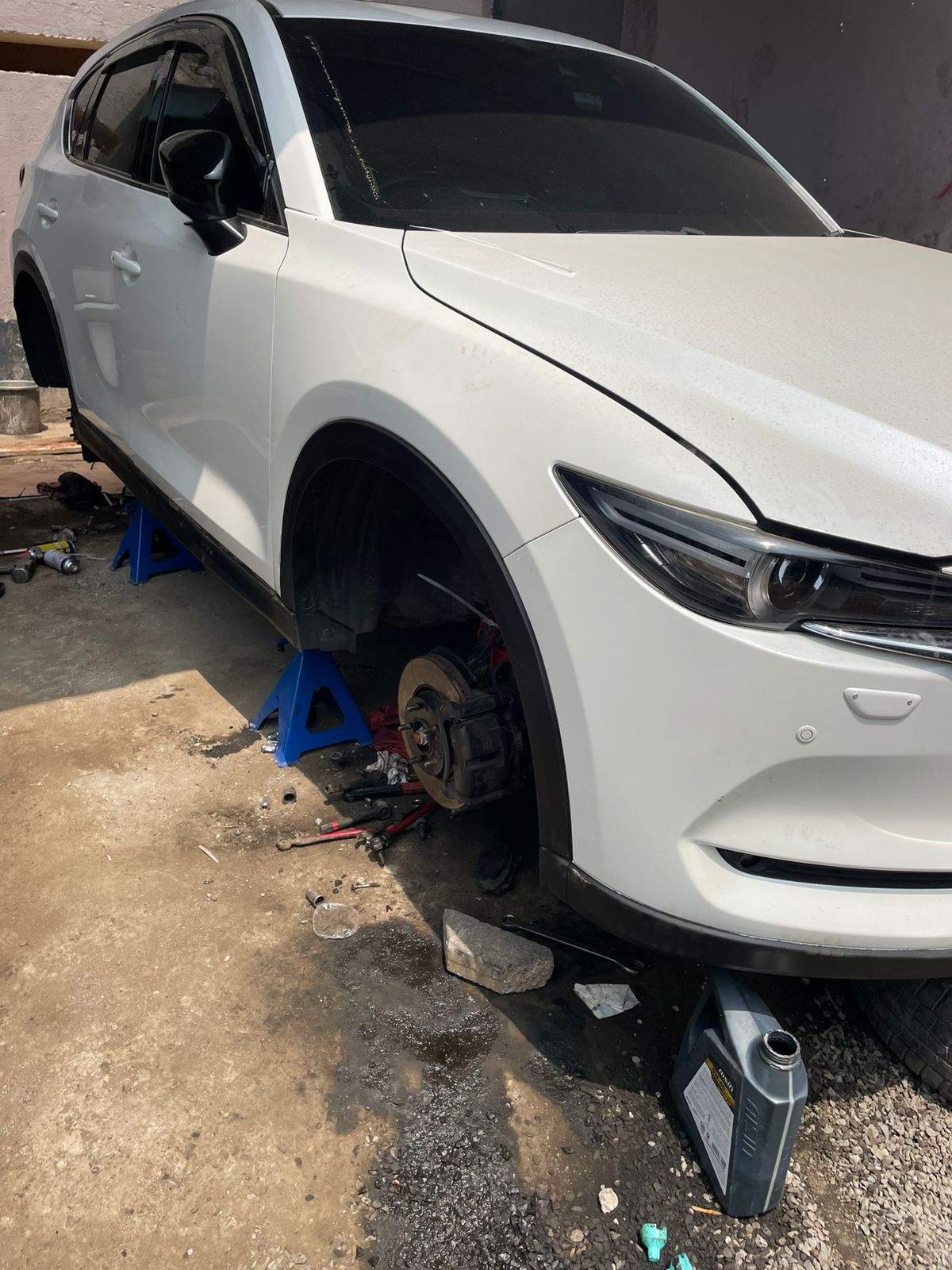
Knowing why towing is needed can help you make safer decisions when your vehicle breaks down. Some problems can be handled at the roadside, such as a flat tyre or a flat battery. Other situations make it unsafe or impossible to continue driving.
Trying to drive a damaged vehicle may worsen the problem, expose you to traffic, or create a danger for passengers and other road users. A professional towing and roadside rescue service can assess the situation, recover the vehicle and take it to a suitable location for inspection or repair.
Why might a vehicle need towing?
1. The vehicle cannot start
A dead battery, starter fault, fuel system issue or electrical problem may leave your vehicle unable to move. A jump-start can help in some cases, but if the vehicle does not restart or the cause is unclear, towing is a safer option than repeatedly trying to start it.
CRS can provide battery jump-start assistance and towing when the vehicle needs further attention. Avoid forcing the ignition repeatedly, especially if you notice smoke, burning smells or unusual sounds.
2. An accident has caused damage
After a collision, a vehicle may appear driveable while having damaged steering, suspension, brakes, wheels or the underside. Fluid leaks and loose body panels can also make driving unsafe. Accident recovery allows the vehicle to be moved without adding further damage.
If the vehicle is blocking traffic or is in a dangerous position, move yourself and your passengers away from moving vehicles when it is safe to do so. Contact the relevant emergency or traffic authorities where necessary, then arrange recovery and notify your insurer.
3. A flat tyre cannot be changed safely
A tyre change may solve a simple puncture, but not every roadside location is safe for changing a wheel. You may also lack a usable spare tyre, jack or wheel key. A damaged wheel, multiple punctures or a tyre that has come off the rim may require towing or specialist assistance.
Switch on your hazard lights, park as far from traffic as possible and do not stand on the traffic side of the vehicle while waiting for help.
4. The vehicle has overheated
Continuing to drive an overheating vehicle can cause serious engine damage. If the temperature warning appears, steam comes from under the bonnet or the engine loses power, stop in a safe place and switch it off.
Do not open a hot radiator cap. Wait for the vehicle to cool and request assistance. If the cause cannot be safely corrected at the roadside, towing is usually more appropriate than driving to a garage.
5. You have run out of fuel
Running out of fuel can happen during a long journey, in traffic or when a fuel gauge is inaccurate. If you are stranded in an unsafe location, emergency fuel delivery may get you moving again. If the vehicle still does not start, or if the wrong fuel has been added, do not continue trying to drive it. Ask for roadside assistance or a tow.
6. The vehicle is locked or stuck
Locked keys inside the vehicle do not always require towing. A vehicle unlock service may resolve the problem. However, a vehicle stuck in mud, sand, a ditch or a difficult parking position may need recovery equipment and a flatbed or other suitable tow method.
Why is professional towing safer?
Different vehicles and situations require different equipment. A flatbed tow truck can carry a vehicle on its platform, while a wheel-lift truck supports the appropriate wheels for certain recoveries. The correct method depends on the vehicle, its condition, the road position and the distance to be covered.
Professional responders can also reduce the risk of additional damage during loading and transport. This matters particularly for vehicles with damaged wheels, low ground clearance, automatic transmissions or four-wheel-drive systems.
What should you do before the tow truck arrives?
- Move to a safe position if you can do so without driving a damaged vehicle.
- Switch on hazard lights and use warning equipment only if it is safe to place it.
- Keep passengers away from traffic and remain visible at night.
- Share your exact location, nearby landmark, direction of travel and vehicle details.
- Explain the problem, damage, number of passengers and whether the vehicle is carrying special loads.
- Remove valuables and keep your keys and important documents with you.
- Follow the responder's instructions during loading and recovery.
Do not stand between the vehicle and the tow truck during recovery. Do not attempt to attach ropes or push a vehicle on a busy road unless trained people have made the area safe.
What information should fleet operators record?
Fleet managers can reduce delays by keeping each vehicle's registration details, make, model, fuel type and driver contact information accessible. Drivers should report the location, symptoms, warning lights, accident details and whether the vehicle can roll or steer.
A clear breakdown procedure should also explain who approves towing, where vehicles should be taken, how insurance is notified and how receipts are recorded. CRS customers can pay by M-Pesa, card or a CRS account, depending on their arrangement.
Where can you get towing and roadside rescue in Kenya?
CRS provides 24/7 towing and roadside rescue, including flatbed and wheel-lift towing, accident recovery, jump-starts, tyre changes, emergency fuel and vehicle unlock assistance. CRS has bases in Nairobi, Mombasa, Kisumu and Nakuru, with partner responders covering all 47 counties.
The target response time is under 30 minutes in Nairobi and major towns, although actual response depends on location, traffic, weather and the nature of the recovery. You can learn more on the roadside rescue services page or find guidance in the frequently asked questions.
For common routes and areas, see roadside assistance for Thika Road, Mombasa Road, Nairobi CBD, Waiyaki Way and Westlands, Karen and Lang'ata, or the Nairobi–Mombasa Highway.
If your vehicle has broken down, been involved in an accident or cannot be driven safely, call CRS on +254 727 700 770 for 24/7 towing and roadside rescue.